
Ridge Vents vs. Static Roof Louvers: Choosing the Right Attic Ventilation
When we think about our homes, we usually focus on the shingles or the color of the siding, but what happens underneath is just as important. A healthy roof needs to breathe. Here in the Upstate, our homes face a unique mix of intense, humid summers and surprisingly chilly, damp winters. Without the right airflow, a house can quickly develop serious structural and efficiency issues.
Many Greenville homeowners ask us how to keep their attics properly ventilated to protect their investment. It is a critical question, especially considering that inadequate airflow can void manufacturer warranties and force your HVAC system to work overtime. Two of the most common solutions we install and service are ridge vents and static roof louvers (also known as box vents).
Deciding between these two options is not just about aesthetics; it is about finding the optimal performance for your specific architectural style and protecting your property from premature aging. Unfortunately, many out-of-town storm chasers rush through installations without calculating balanced roof exhaust ventilation, leaving you with a system that fails when you need it most. At Anchored Roofing LLC, we believe in doing things right the first time. Let us dive into the differences between these two popular ventilation systems, how they work, and which one might be the best fit for your home.
The Crucial Role of Attic Airflow
Before comparing specific products, it helps to understand why your attic needs to breathe. In a well-designed system, cool, fresh air enters through the soffit vents at the eaves of your house and pushes hot, moist air out through exhaust vents near the peak. This continuous cycle is essential year-round. During the sweltering summer months, trapped heat can literally bake your shingles from the inside out, drastically reducing their lifespan and driving up your air conditioning costs.
In the colder months, the risks change but remain just as severe. Everyday activities like cooking, showering, and running the laundry generate significant moisture that rises into your attic. Without a clear escape route, this moisture hits the cold underside of your roof deck. Preventing winter attic condensation buildup is incredibly important because that moisture can lead to wood rot, mold growth, and compromised insulation. Dealing with these issues often results in an extensive roofing repair that could have been completely avoided with proper airflow.
When evaluating ridge vents vs box vents attic airflow, the goal is always to achieve a balanced system. You want the amount of air intake at the eaves to perfectly match the exhaust capacity at the top. Reliable roofing companies will always take the time to measure your attic space and calculate the exact amount of Net Free Area (NFA) required to meet building codes and manufacturer specifications.
Ridge Vents: Continuous and Concealed
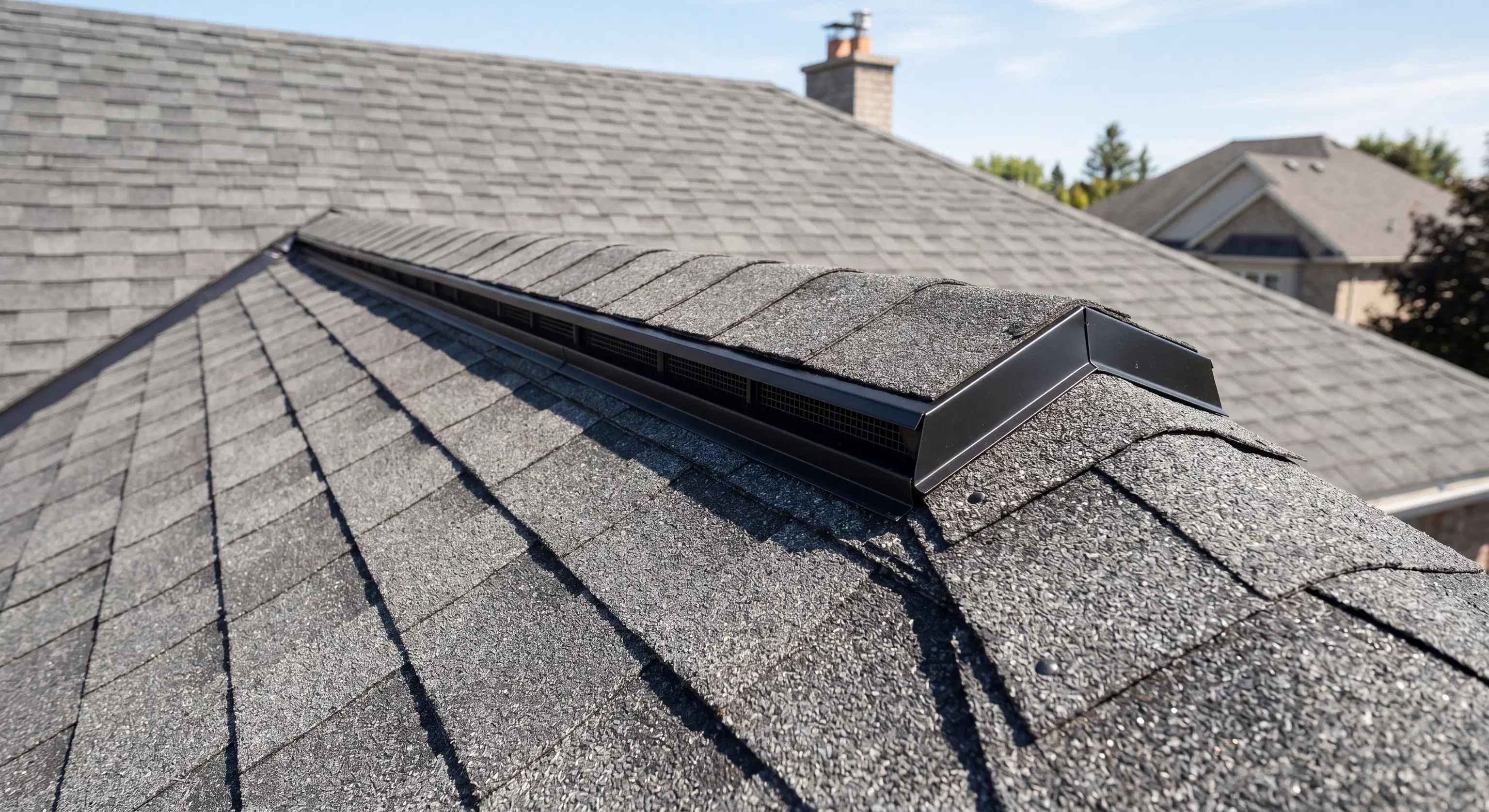
Ridge vents are exactly what they sound like: they are installed along the very peak, or ridge, of your roof. They provide a continuous opening for hot air to escape and are typically covered by specialized ridge cap shingles, making them blend seamlessly into the rest of the structure.
The biggest advantage of a ridge vent is efficiency. Because it runs the entire length of the roof peak, it allows for a uniform exhaust of hot air from the highest possible point in the attic. This continuous airflow prevents hot spots from forming in isolated corners of your attic space. When paired with adequate soffit intake, ridge vents are widely considered the most effective passive ventilation system available today.
Visually, they are the preferred choice for homeowners who want a clean, uninterrupted roofline. If you are investing in a new roof installation, upgrading to a ridge vent system is an excellent way to boost your home's curb appeal while maximizing energy efficiency. However, it is worth noting that ridge vents work best on long, straight rooflines. If your home has a complex layout with multiple smaller peaks, dormers, or a hip roof design, a ridge vent alone might not provide enough exhaust capacity.

Static Roof Louvers (Box Vents): Targeted Ventilation
Static roof louvers, commonly referred to as box vents or turtle vents, are individual exhaust fixtures placed near the peak of the roof. Unlike ridge vents, which run continuously, box vents are installed over strategically cut holes in the roof deck. They have no moving parts and rely entirely on natural wind and the upward movement of hot air to ventilate the attic.
Box vents are highly versatile. For houses in areas like Simpsonville with intricate, multi-tiered rooflines or limited ridge length, box vents are often the most practical solution. A professional contractor can calculate exactly how many vents are needed and place them in locations that maximize exhaust efficiency without detracting from the front-facing curb appeal.
When comparing the two, static louvers do require more penetrations in your roof deck, which underscores the importance of hiring an experienced team to ensure the flashing is installed flawlessly. They may also be slightly more visible than a continuous ridge system. However, they are a proven, incredibly reliable method of exhaust. For homeowners mindful of their overall roofing cost, replacing existing box vents during a reroof is a straightforward process that guarantees lasting performance.
Making the Right Choice for Your Home
Ultimately, there is no single "best" option that applies to every house. The architecture of your property, your existing intake ventilation, and your specific climate challenges dictate the right approach. Selecting the correct system requires a thorough inspection and an honest conversation about your long-term goals for the property.
At Anchored Roofing LLC, we are committed to providing transparent, high-quality roofing services that protect your family and your wallet. We understand that dealing with home improvements can be stressful, which is why we handle all the calculations, pull the necessary permits, and use only top-tier materials with strong warranties.
If you are worried that your home is not breathing right, or if you have noticed signs of moisture in your attic, do not wait for the problem to escalate. Reach out to our expert team based right here in Greer. Explore our comprehensive attic ventilation solutions today. Give us a call, y'all, and let us make sure your roof is ready for whatever the Carolina weather brings!